
If your ankles are puffy and swollen by evening, read this before you panic

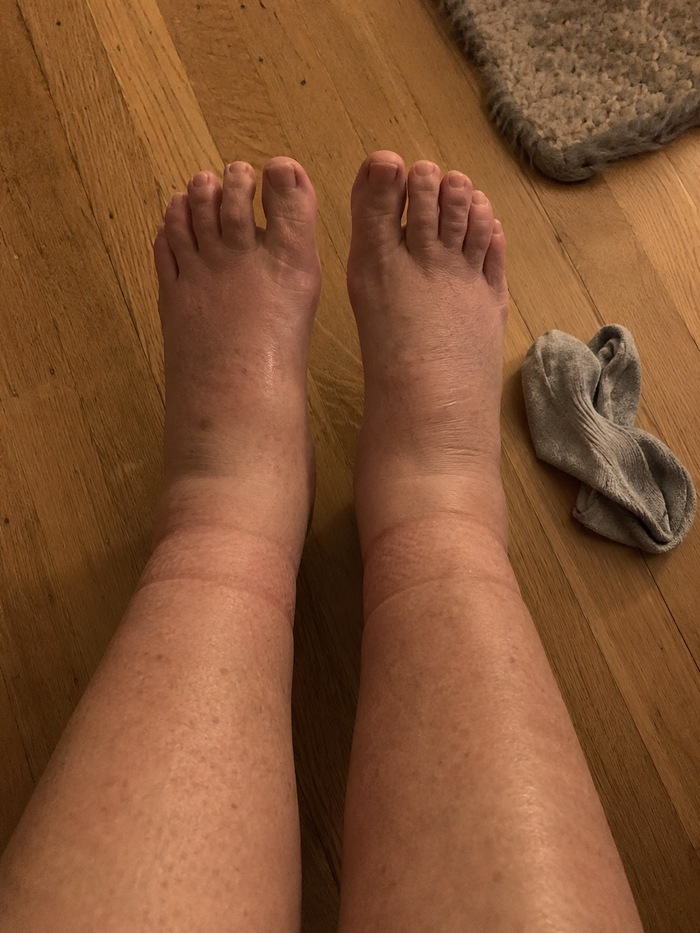 Before
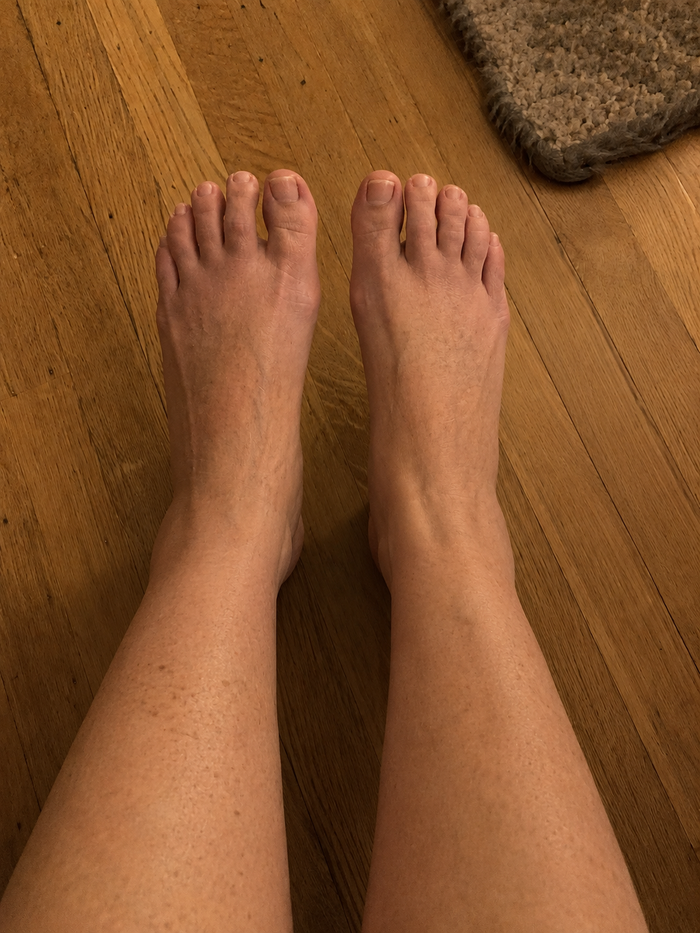 After 5 days
You probably noticed it in the evening.
You took your socks off, looked down, and your ankles were puffier than they should be. Maybe you pressed a thumb into the swelling and the little dent stayed there a second too long before it filled back in. And somewhere in the back of your mind, quietly, a worry started.
I am a podiatrist. I have spent fourteen years watching people sit across from me with exactly that worry on their face, having spent the night before reading things on the internet they should never have read. So let me do for you what I do for them.
Why it is always worse by evening
Here is the thing almost nobody explains. Your feet are the lowest point of your body, and they fight gravity every hour you are upright. Your heart pushes blood down easily enough. Getting that tired fluid back up, out of your feet and up your legs, is the hard part. There is no second pump down there doing it. It comes down to your calf muscles and the tone of the vessels in your lower leg, and as the years pass, that return slows. Just a little.
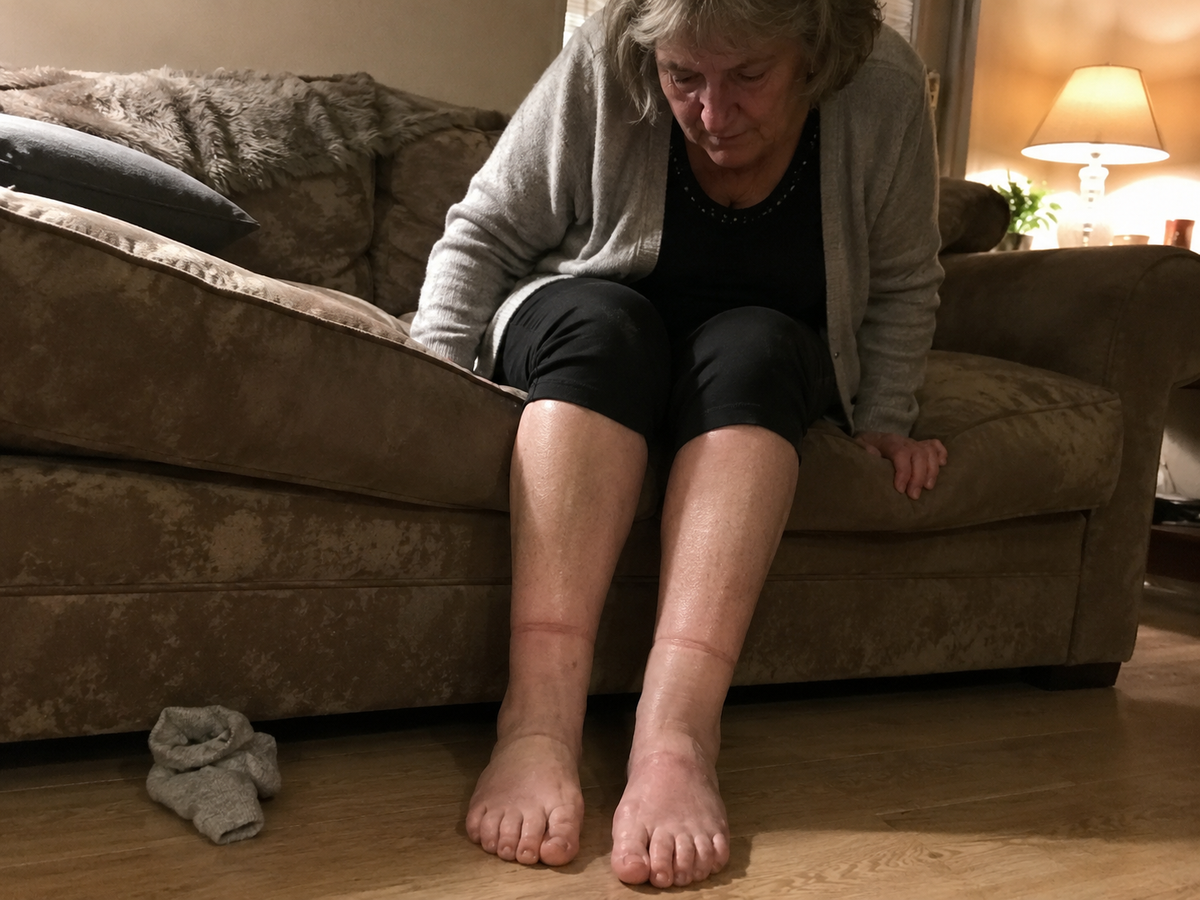
So through the day, while you are on your feet, fluid settles in the lowest place it can reach. Your ankles. Your feet. It builds up while you are upright and drains away overnight while you lie flat, which is the exact reason it is puffy by evening and gone by morning. That is the swelling. That is the heaviness. That is the dent that stays when you press it. Your body is not broken. It is getting no help with a job that was always hard.
This is the part to hold on to. The swelling is not the problem itself. It is the symptom of slow return. Help the return, and you are working on the actual cause, instead of chasing the puffiness with creams and cold packs after the fact.
And the one thing quietly making it worse
Most people reach for the shoe. Better shoes, softer insoles. A good shoe is fine. But it sits under your foot for part of the day, and the moment you take it off, barefoot to the kitchen, in your slippers, it does nothing for you at all.
There is only one thing you own that wraps your foot and lower ankle, against the skin, every single waking hour. Your sock. The one thing touching exactly where the fluid pools, all day, every day. And what does an ordinary sock do with that? Worse than nothing. It has one band of elastic round the top, gripping hardest in a single spot and doing nothing helpful below it. It is like tying a band around the top of a garden hose and wondering why the water will not flow.
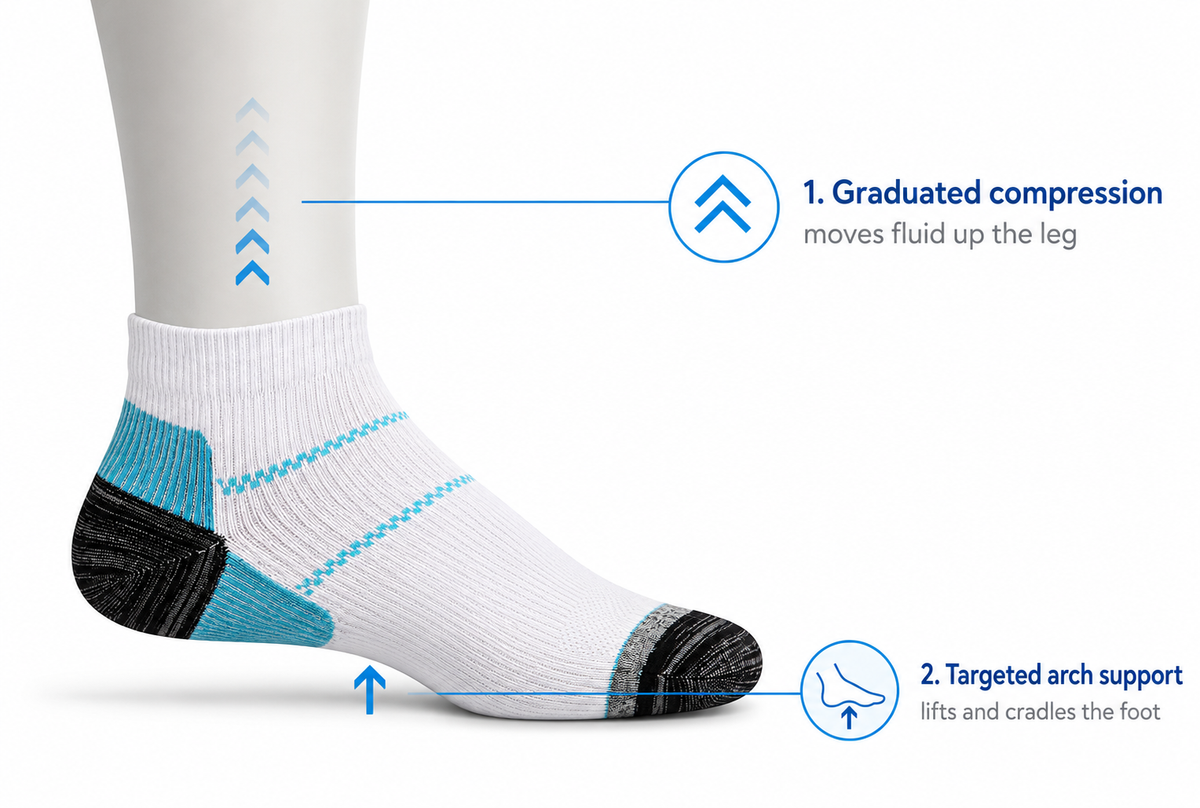
What your leg actually needs is the exact opposite of one tight ring. It needs to be held firmest down at the ankle, where the fluid sits lowest, then more gently as it rises, so the pressure walks the fluid upward instead of letting it pool. Firm at the bottom, easing toward the top. That is graduated compression. And it is the one thing an ordinary sock will never do for you, no matter how soft or expensive it feels.
And here is the part most people go quiet at. You already wear socks. Every day. All day. For years. You have been doing the behaviour the whole time. The only question that ever mattered is whether the sock against your skin is quietly working for your legs, or quietly working against them.
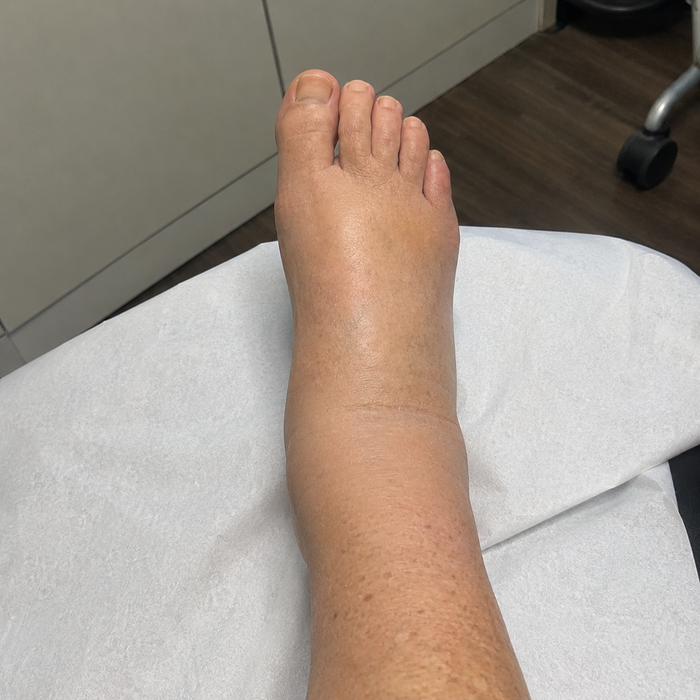
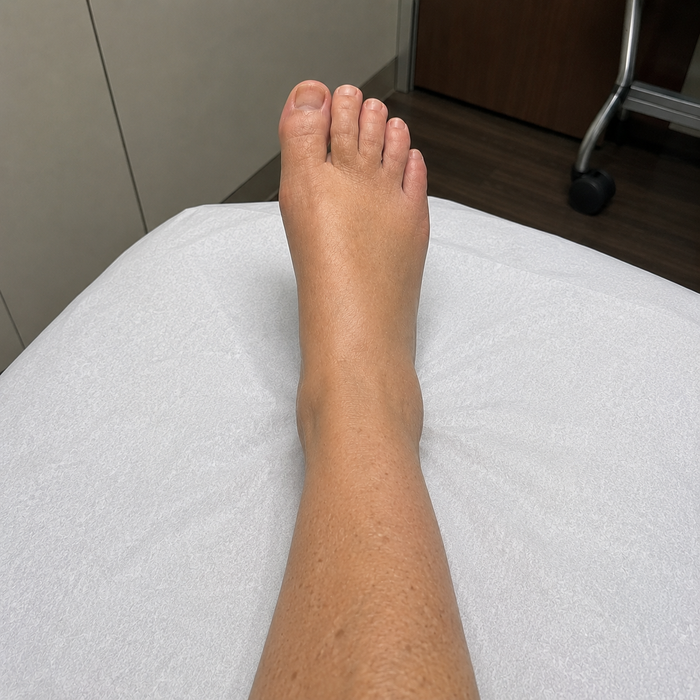
The one sock I tell patients to try
Knowing the principle is one thing. Finding a sock that does it properly, that a real person will actually wear all day without fighting it, is another. Most medical compression is grey, stiff, and so brutal to pull on that people give up inside a week. Most of the high street is an ordinary sock with a firmer cuff and a clever label. In fourteen years I have found one exception worth writing down on a slip of paper.
Firmest at the ankle, easing as it rises, so the fluid that settles in your feet is guided back up instead of left to pool. The single thing an ordinary sock cannot do, and the reason your legs feel lighter by evening.
A firmer woven band runs under the arch, cradling the part of your foot that carries you all day. The support people chase with insoles, built into a sock you were going to wear anyway.
No single cruel band of elastic carving a ring into your ankle. The pressure is spread and engineered, so it holds without strangling. The first sign most people notice is the simplest one. No red ring when the socks come off at night.
The low ankle cut means they vanish inside any shoe. Breathable, moisture-wicking fabric means no hot, sweaty feeling trapped under nylon, which is the reason most people quietly give up on compression. A reinforced heel and toe means they last, and they look like a normal, good sock. You wear them every day without thinking about it, the same way you wear the wrong ones now.
What changes, and how fast
I will be honest with you. This is not magic and it is not overnight. It is the right thing working for you every hour you are upright, which no cream and no cold pack can match. Most people notice the difference inside the first week. The heaviness eases by evening. The dent that used to sit in the skin fills back in the way it should. And the small cold worry you have been carrying tends to quietly go with it, once you understand what was really going on.
The photos below were sent in by real customers. No filters. No flattering angles.
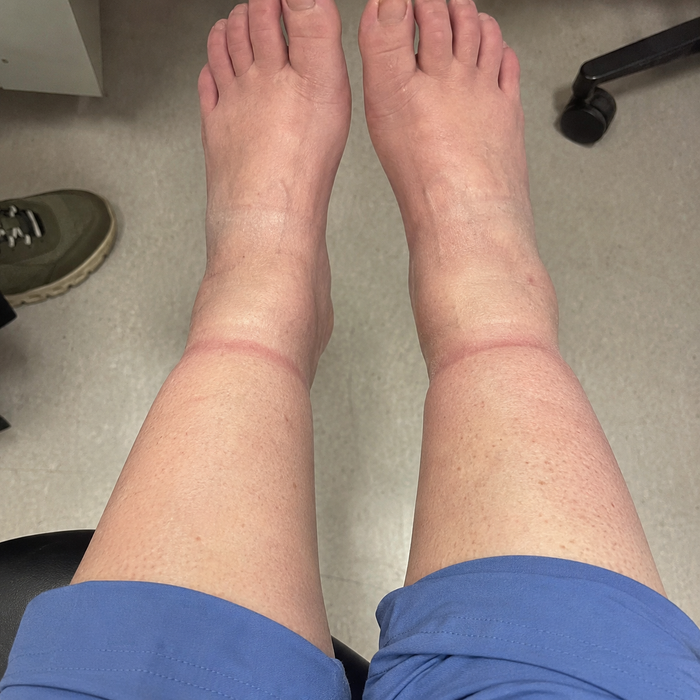
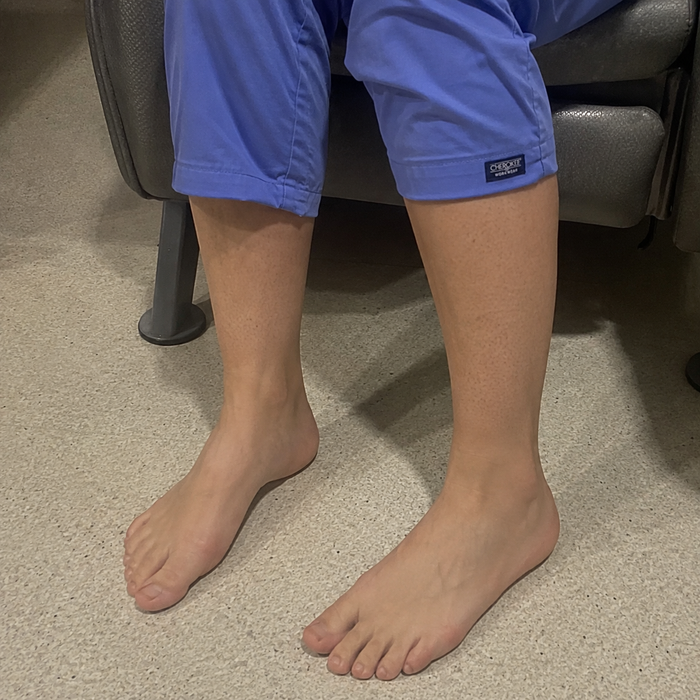
By the evening my ankles were puffy and the dent stayed when I pressed it, and I had frightened myself half to death over what it meant. Getting it explained calmly was half the relief. The other half came a week into these, when the heaviness by evening was simply gone. I did not change one other thing.
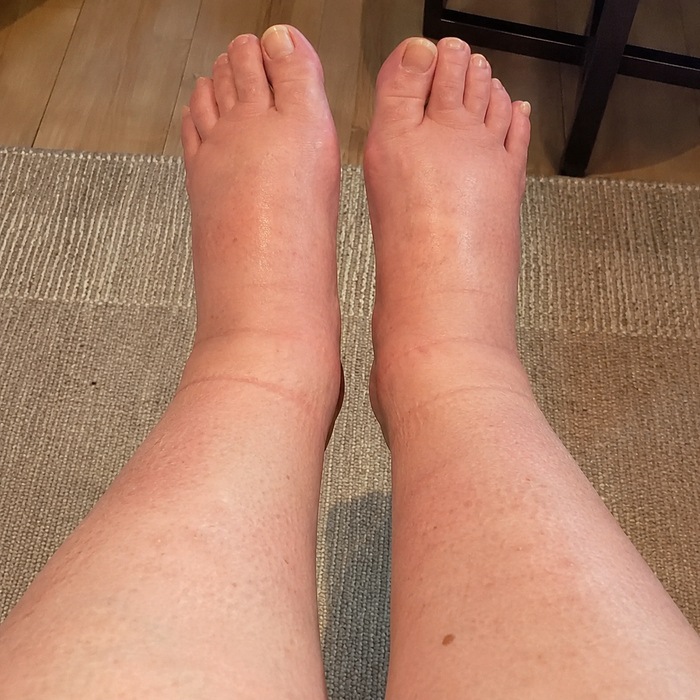
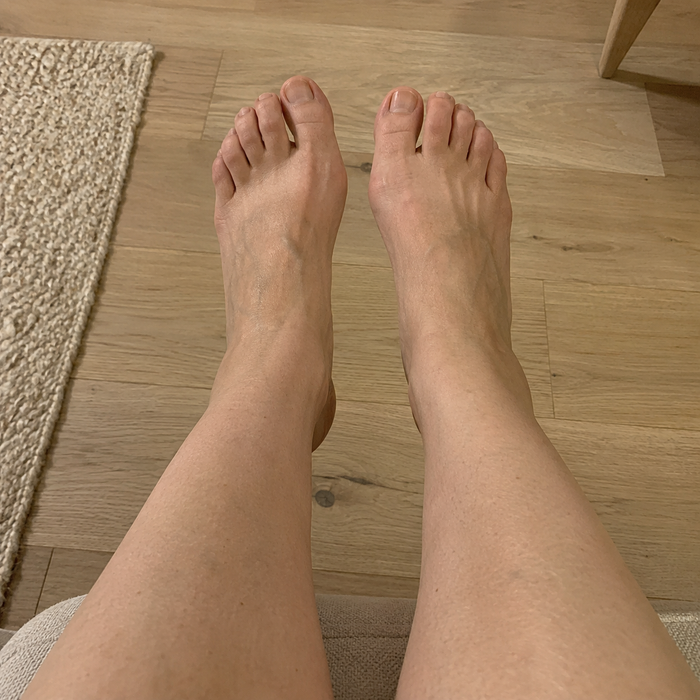
I had a drawer of medical stockings I could never get past my calf. These I pull on like a normal sock in the morning and forget about. By the evening my feet are not heavy and I am not peeling anything off. I did not change one other thing.
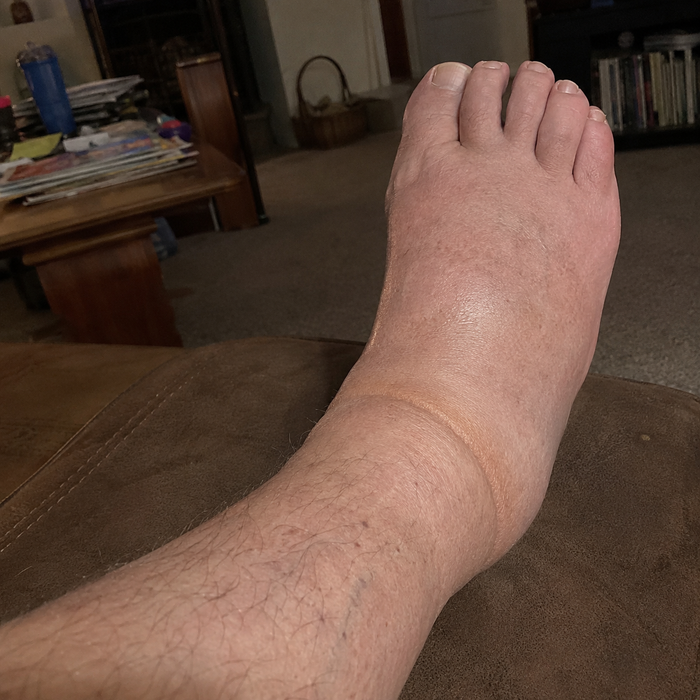
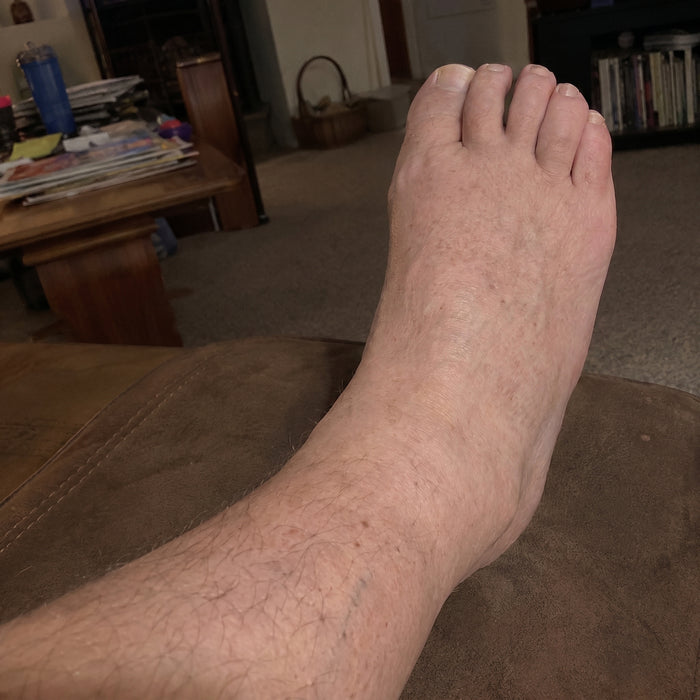
Every evening I used to peel my socks off and find two angry rings dug into my ankles. I thought that was normal. With these there is nothing there at night, and my legs feel lighter than they have in years.
Where to find them
I do not typically recommend specific products. In fourteen years I can count on one hand the times I have written a name on a slip of paper. This is one of them. They are made by a UK company in small batches, more clinics now point patients the same way, and that is why the stock does not always keep up, and why I cannot get extra pairs to hand out myself. They sell direct, to customers only.
So if you are the person I described at the start, looking down at your feet in the evening with that small cold worry, understand this. You have most likely been frightening yourself over an ordinary, mechanical, fixable cause. And wearing the wrong tool for it the entire time.
There is a full 30 day money-back guarantee, which tells you everything about how confident they are. If they do not help, you send them back and lose nothing but the trying. Click below to see whether they are still in stock.
Since this article went up, and with more than one clinic now pointing patients the same way, stock has been running low. If you are thinking about trying them, now is the time.
There is a full 30 day money-back guarantee, so if they do not help you simply get your money back. No risk, no hassle.

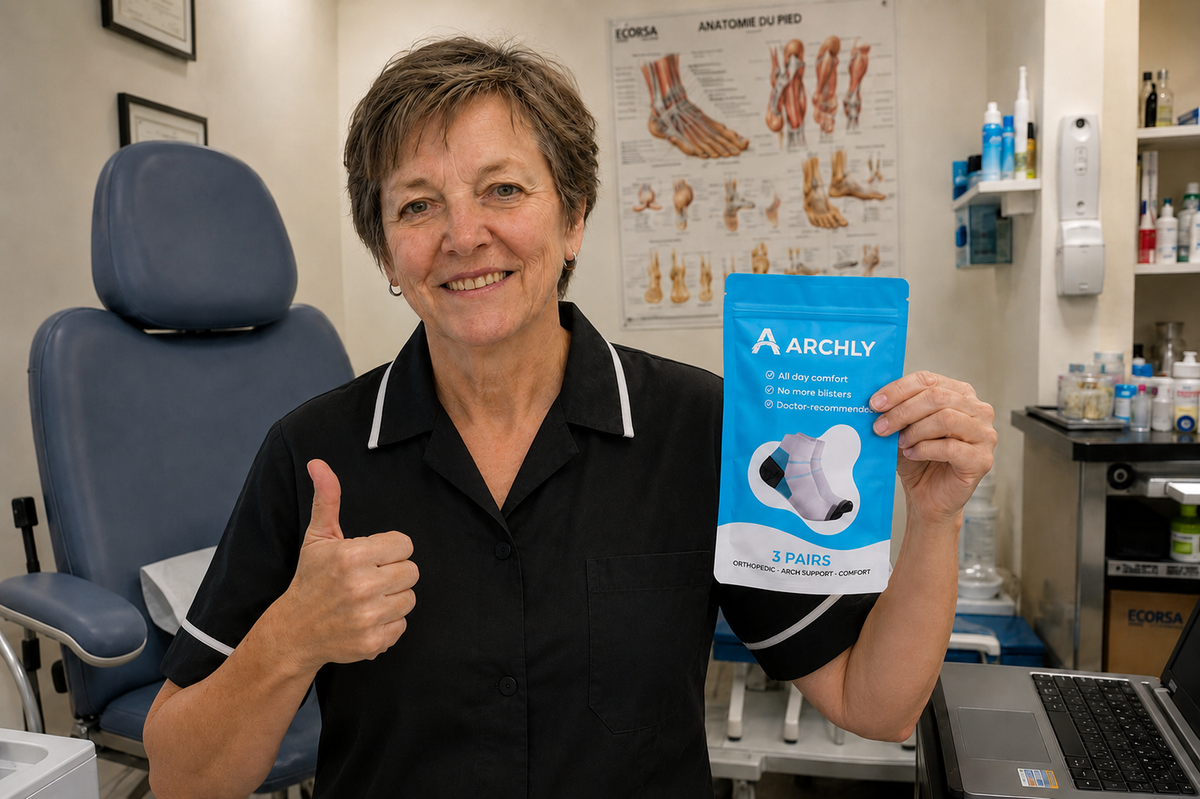
Dr. Emma Vos is a podiatrist with over 14 years treating tired, heavy and swollen feet in everyday patients. A large part of her week is spent calmly explaining to frightened people why the swelling they see in the evening is so often a simple matter of slow circulation, and what actually helps.
Away from the clinic she lives just outside the city with her husband, two grown children, and a stubborn old spaniel called Pip. She walks far too much, drinks far too much tea, and has come to believe that most foot trouble starts with the one thing we all pull on every morning without a second thought.

The part about ruling out the scary causes first is what made me trust her. I had been quietly worried for months. A week in these and the puffiness by evening was gone. Ordered a second pair.

I pressed my ankle one night, the dent stayed, and I genuinely did not sleep. Reading this was the first time anyone explained it in a way that made sense. Such a relief, and the socks helped on top of that.

My daughter asked what I had changed because I had stopped mentioning my feet on the phone. Nothing, I said. Just my socks. She did not believe me either.