
Why Most Compression Socks Fail, The 3 Things I Tell Every Patient To Check
After sixteen years treating tired, swollen, aching feet, I can usually tell why a compression sock didn't work, and it's almost always one of three mistakes. The same three I check for every time.
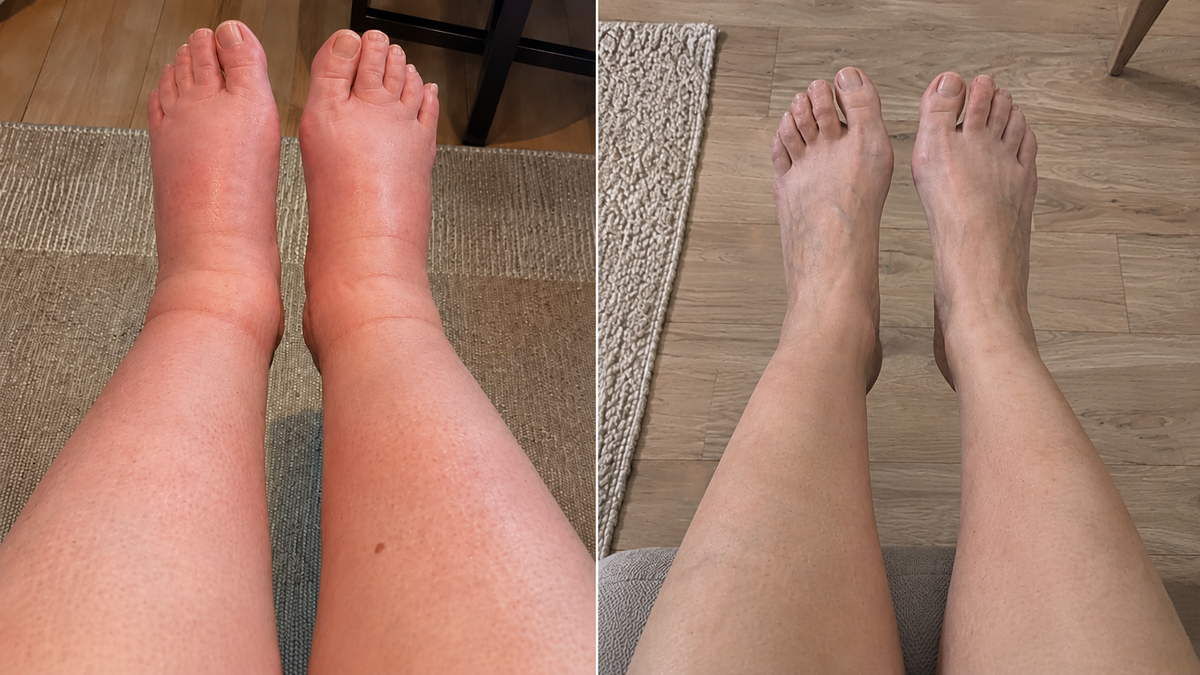
I want to start with the sentence I hear in clinic almost every week: "I tried compression socks. They didn't work for me."
Here's the honest truth. In nearly every case, the right sock could have made a difference. The sock was simply wrong, on one of three counts. People give up on the idea when they should have given up on the pair.
And the most common reason of all isn't the science at all. It's that the sock ends up in a drawer by the second morning, because nobody could face wrestling it on again.
You've Probably Already Tried Most Of It
The gel insoles. The arch inserts that felt brilliant for a week. Maybe even a pair of proper orthopaedic shoes that helped, until the ache quietly crept back. And somewhere along the way, you may have started telling yourself the thing I hear almost every day: "I suppose it's just my age. Not much to be done."
I understand why. But in most cases it isn't your age, and it isn't that support can't help. It's that nobody explained why your feet ache in the first place, so every fix only solved half the problem.
First, Why Your Feet Actually Ache By Mid-Afternoon
Here's what almost no one explains. That heavy, swollen, aching feeling usually isn't made in the sole of your foot. It's made in the circulation underneath it.
When you stand or sit still for hours, gravity wins. Blood and fluid settle in the lower leg and foot faster than your muscles can pump them back up. Pressure builds. At the same time, the arch slowly gives way under the load. Put those two together and you get the familiar 3pm result: tired, puffy, achy feet that you can't wait to get out of your shoes.
This is exactly why an insole on its own never fully fixes it. An insole props the arch up for a moment, but the instant you stand, the fluid pools again and the arch sinks back down. It's like bailing a boat without plugging the leak. The real answer has to do two things at once: gently encourage the fluid back up the leg, and support the arch while you actually move.
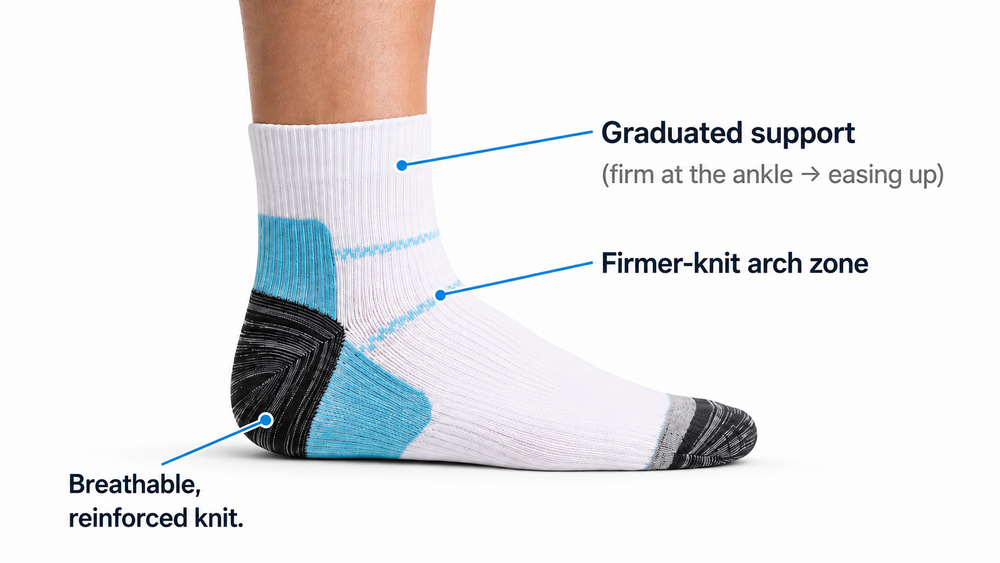
What "Graduated Compression" Actually Means
It's a term that gets thrown around and rarely explained. "Graduated" simply means the support is firmest at the ankle and eases off as it travels up the leg. That gentle gradient is what nudges fluid in the right direction: upward, the way your circulation wants it to go, instead of trapping it.
Compression is measured in units called mmHg. Hospital stockings sit at the strong end. For everyday, all-day wear, what most people on their feet actually need is the gentle, comfortable end of the scale, enough to support healthy circulation and leave your legs feeling lighter, not so much that you can't bear to keep them on. Stronger is not better. Worn-every-day is better.
One important note: Archly socks are an everyday comfort product, not a medical device or a treatment. If you have diabetes, a circulatory condition, or an existing leg or foot problem, please speak to your GP or podiatrist before wearing compression.
The 3 Things That Actually Matter
When patients ask me what to look for, I give them the same three checks. Get these right and most people find their feet feel far more comfortable through the day. Get them wrong and you're throwing money away.
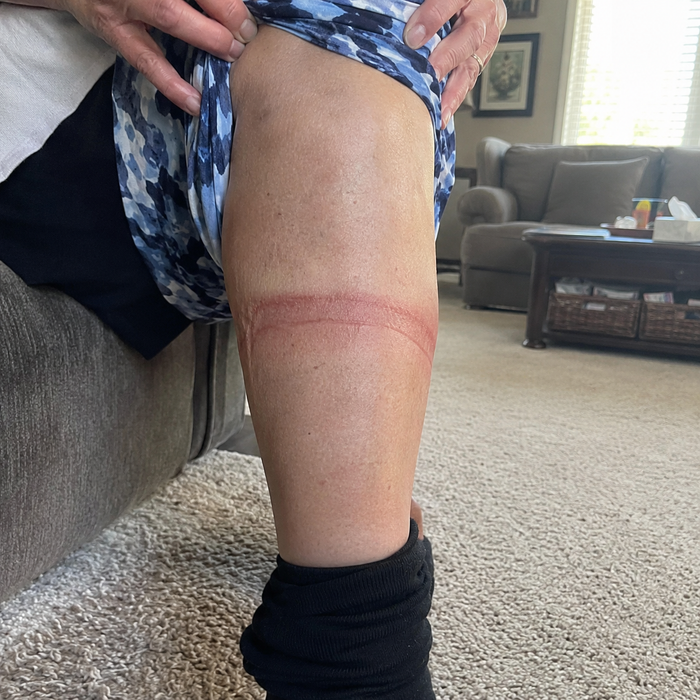
If it leaves a deep red ring, it's the wrong sock
The most common complaint I hear: "They cut into my leg and left a red welt by lunchtime." That welt is not the sock working. It's a warning.
A band that bites at the top isn't graduated support. It works against the circulation you're trying to support, not with it. Proper graduated support is firmest at the ankle and eases gently up: a steady, comfortable hug, never a pinch that traps the fluid below it. Archly is built to feel like a comfortable hug, not a tight squeeze.
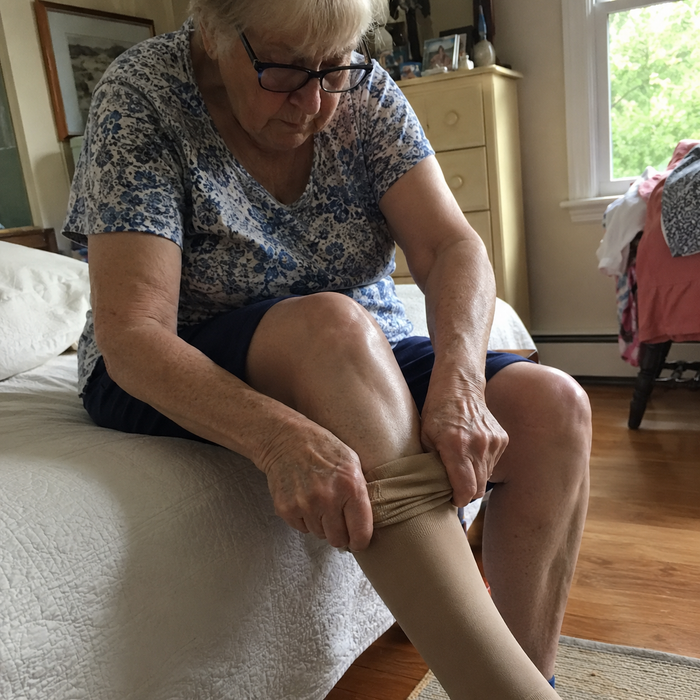
The best sock in the world is useless if you can't get it on
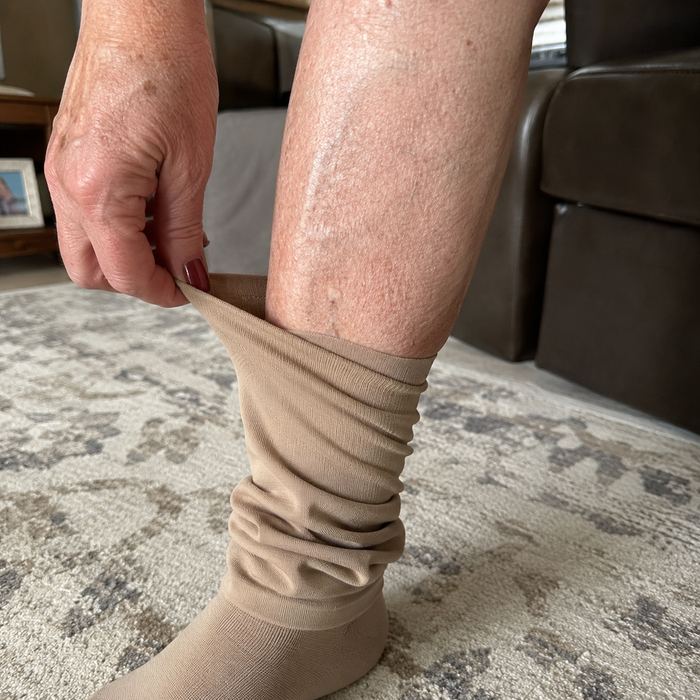
This is the mistake that quietly costs people the most. They buy a stiff "medical" sock, fight with it for ten minutes the first morning. Some of my older patients simply can't manage it alone, and within a week it's abandoned in a drawer. A sock you don't wear does nothing.
It's why I've stopped recommending hot, rigid, knee-high surgical stockings to most people. What actually gets worn is a soft, breathable, ankle-height sock with reinforced fibres that hug the foot and slide on as easily as a normal pair, and disappear inside your shoe.
"Gentle" is not the same as "doing nothing"
I hear this one constantly: "It's so comfortable. Is it actually doing anything?" Here's the trap. We're taught that if it doesn't hurt, it isn't working. With everyday support, the opposite is true.
You can feel it the first morning, the firmer-knit arch zone sitting under your foot, a steady support rather than a squeeze. That's the work happening: gentle graduated support encouraging the fluid up the leg, and a firmer arch zone supporting the foot so it isn't left to collapse under the load. You shouldn't have to suffer to know it's working.
The One Sock I've Seen Get All Three Right
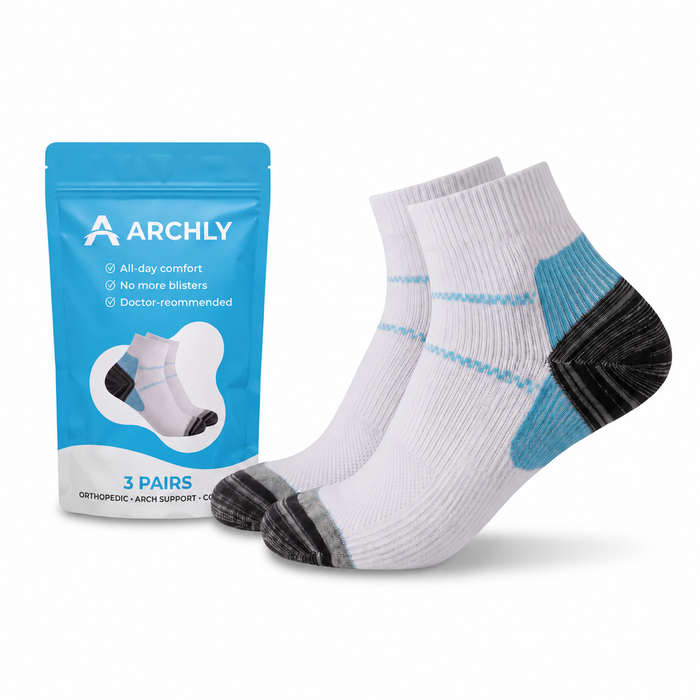
I don't put brand names in front of patients often. In sixteen years I've recommended exactly three products by name. Archly is one of them, for the simple reason that it's the rare sock that clears all three checks at once.
It's gentle enough to wear all day, easy enough to actually put on, and properly built, gentle graduated support and a firmer-knit arch zone, so it gives comfortable support without the tight, pinching band. They're sold only through their own website, which is how they keep the fit and quality consistent.
How To Actually Wear Them, And What To Expect
The product only does its job if you use it the way the people who never have foot trouble do: every day, all day. A few simple habits make the difference.
- Put them on first thing. Before your feet have a chance to swell, not after. Smooth them flat with no bunching at the arch.
- Wear them through the whole day. Support for one hour does little; support for the eight, ten, twelve hours you're actually on your feet is what changes things.
- Rotate a fresh pair daily. This is the entire logic of a multi-pair bundle: a clean, supportive pair on every morning, one in the wash.
- Wash cool, air-dry or tumble low. No bleach or fabric softener. That's what preserves the knit and the support over time.
A realistic timeline: most people notice their feet feel less tired within the first week or two of consistent daily wear. It isn't an overnight cure. It's steady, quiet support that adds up day after day.
Who Should Take Extra Care
For most people on their feet all day, gentle everyday support is a comfort, not a risk. But compression isn't right for everyone. If any of the following apply to you, check with your GP or podiatrist before wearing compression socks:
- Diabetes or any loss of sensation in the feet
- A diagnosed circulatory condition, or peripheral arterial disease
- Open sores, a current skin infection, or recent leg surgery
What My Patients Say
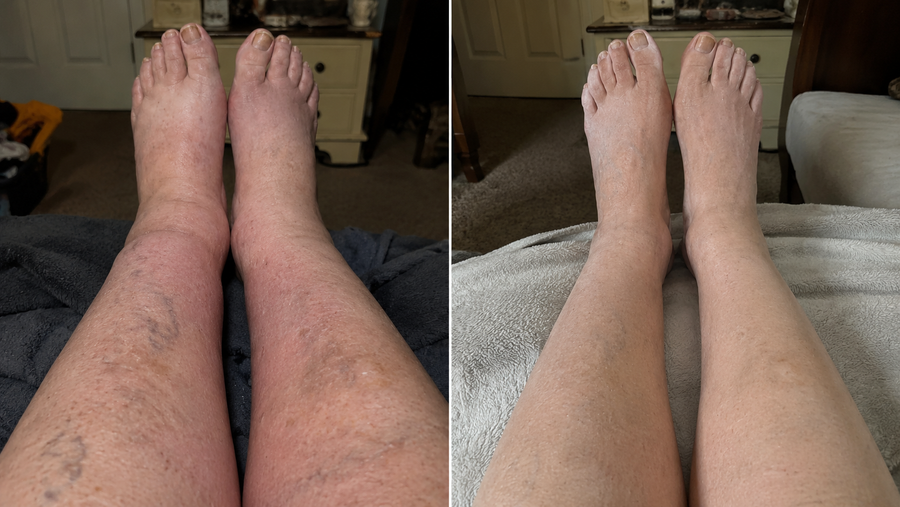
"My old compression socks left a welt by lunchtime. I genuinely dreaded putting them on. These slide on like a normal sock and there's not a mark on my leg at the end of the day. I didn't think that combination existed."
★★★★★ Janet, 61 · retired teacher · after 2 weeks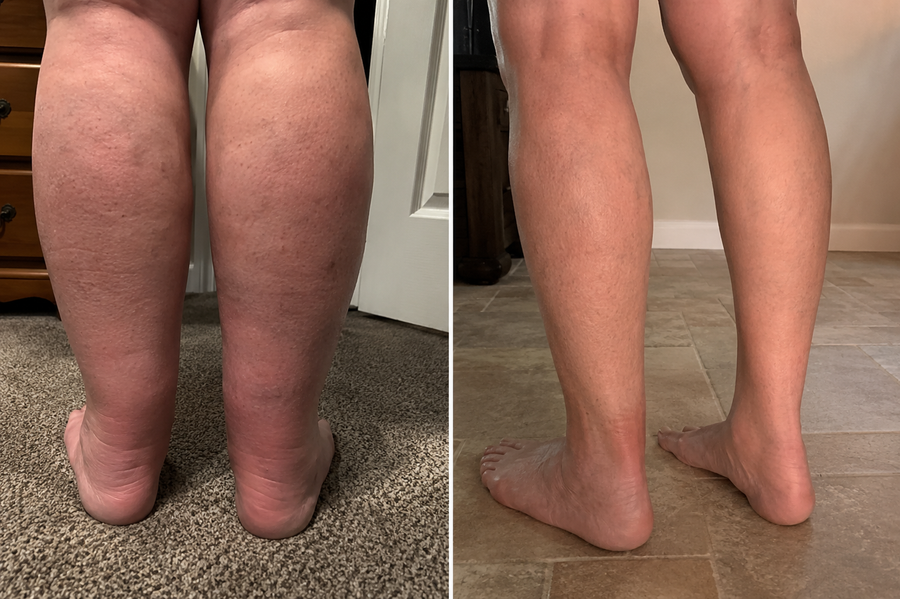
"I'm a ward nurse, twelve-hour shifts. I used to take my shoes off the second I got home because my feet were so sore. I haven't felt the need to once this week."
★★★★★ Donna, 47 · nurse · after 3 weeksResults are individual experiences and are not typical or guaranteed.
Try Them Risk-Free For 30 Days →Comments
I stopped doing my evening walk two summers ago. Told myself it was just getting older. Two weeks in these and I went round the park after dinner without thinking about it. Small thing, didn't feel small.
I'd been taking my shoes off the second I got home because my feet were so sore. Haven't felt the need to once this week. Husband never noticed. I did, every single evening.
I nearly didn't bother because I'd tried insoles and they did nothing. My sister asked what I'd changed. Nothing, I said, just my socks. She didn't believe me.