
Foot Health
How I helped a teacher on her feet all day go from a stabbing pain on her first step each morning to standing through a full shift, in about three weeks
A note from my clinic on why aching arches and puffy ankles get so common after 50, and the simple change that helps most of my patients.


If you get a sharp, stabbing pain in your heel or the arch of your foot on your very first step out of bed in the morning, you already know the particular dread of it.
You have learned to sit on the edge of the bed for a moment before you stand. You ease your weight onto that foot slowly, waiting for the catch. By the time you have made the tea it has settled into a dull ache, and you tell yourself it is fine. Then you are on your feet all day, and by three in the afternoon your arches are burning and your ankles feel tight and puffy inside your shoes.
You tell yourself it is just your age, or your shoes, or that you are on your feet too much. And so you push through it, because that is what you do.
Her name is Margaret. She is 58, a primary school teacher, and she came to my clinic in March barely able to put her heel down. She had been managing it for over a year. She had tried everything she had been told to try. And nothing had really worked.
What I explained to her that morning is what I want to share with you now.
1. The problem is worse than it looks, and it will not settle on its own
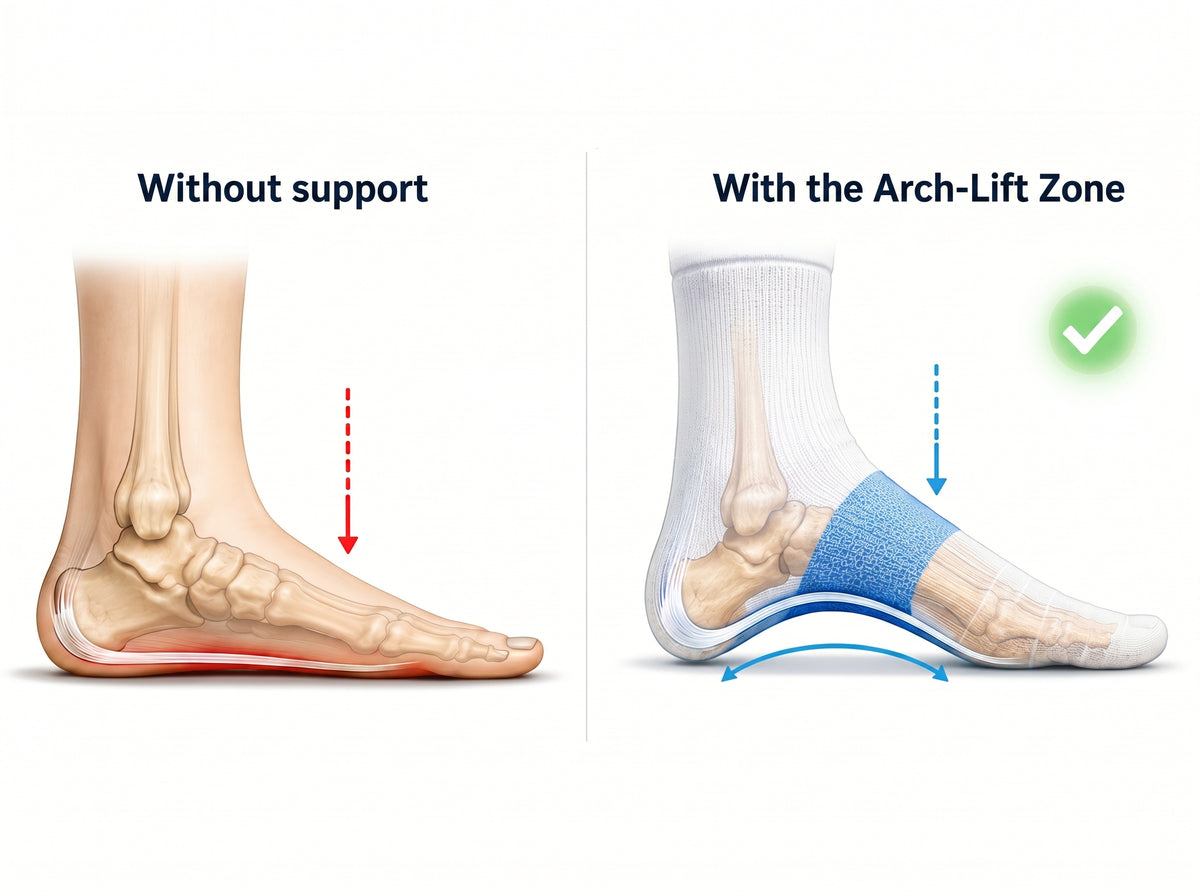
When you stand, your arch is the spring that carries your whole body weight. After years on hard floors, and especially around and after the menopause when the soft tissues lose a little of their stretch, that spring slowly flattens under load.1 The arch drops a touch further than it should with every step. That is the stab you feel first thing, and the burn you feel by the afternoon.
It is not in your head, and it is not simply that you are getting older. It is mechanical. And because you stand on it every single day, it does not get the chance to settle on its own. It usually gets quietly worse.
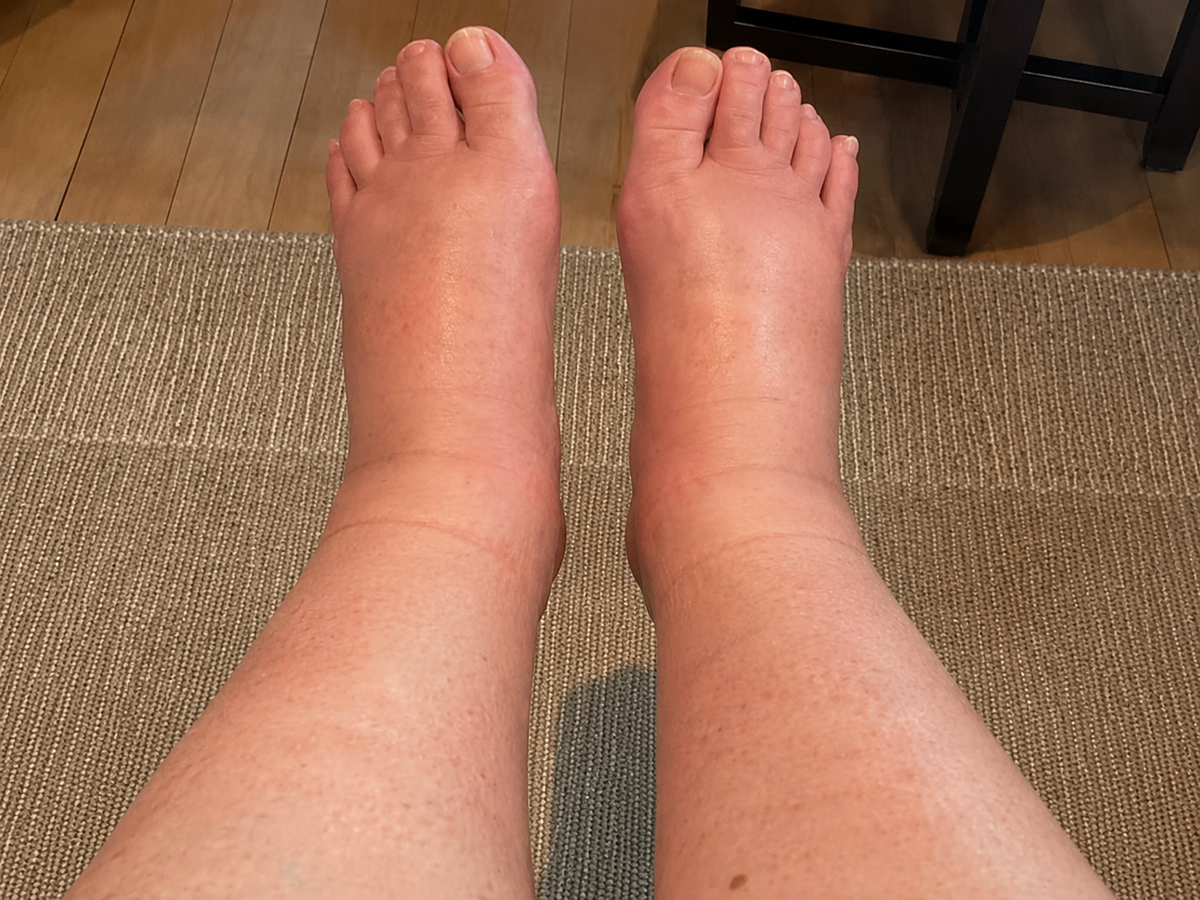
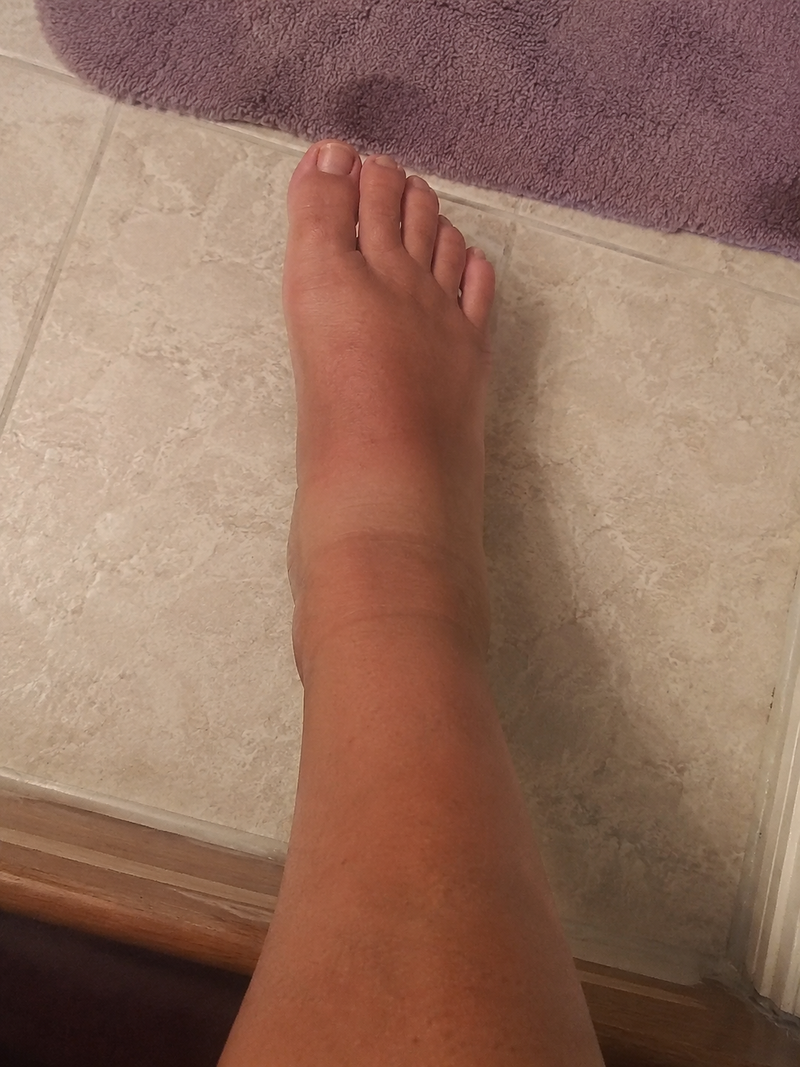
There is a second thing I see in almost the same breath. By evening the ankles look puffy, and there is a deep red dent where the top of the sock has been. That is fluid pooling around the foot and ankle after a long day upright. It is incredibly common, and it tends to arrive hand in hand with the aching arch.
2. Why insoles and new trainers keep letting you down
Almost everyone who reaches my clinic has a drawer full of insoles and at least one pair of expensive trainers that were supposed to fix this. Here is the honest reason they disappoint.
A cushioned insole pads the floor under a foot that is already collapsing. It softens the blow, which feels lovely for an hour, but it does nothing to hold the arch up where it is actually dropping.2 You are treating the symptom, not the thing causing it. The moment you are back on your feet for a full day, the arch flattens again and the ache comes straight back.
Cushioning the floor under a collapsing arch is not the same as supporting the arch. That is why the relief never lasts.
3. What actually needs to happen
Two things, and they are simpler than you would expect. First, the arch needs gentle, consistent support from underneath, exactly where it drops, so the spring is not doing the whole job alone. Second, the foot and ankle need a little gentle compression through the day to help with that fluid pooling, so the ankles feel lighter by evening instead of tight and swollen.3
Do those two things together, every day, and most people notice their feet feel easier within a couple of weeks. The catch is that it has to be something you will actually wear all day, not a rigid device you take out after an hour.
4. The simple thing I started giving my patients
A few years ago I started recommending a specific compression sock to patients in exactly Margaret's position, and it has quietly become the thing I reach for most. It looks like an ordinary white ankle sock, which is rather the point, because people actually wear it.
But it has a tighter-woven panel built into the arch, a zone the maker calls the Arch-Lift Zone, that gently lifts and supports the arch exactly where it tends to drop. The rest of the sock applies a gentle 15 to 20 mmHg compression across the foot and ankle, which is the part that helps with the puffiness and the sock-line dents by the end of the day. A reinforced heel and toe take the wear. You put them on with your shoes in the morning, you forget they are there, and they work quietly all day.
It is from a British brand called Archly.
5. What tends to happen once the arch is properly supported
I am always careful with what I promise, because feet are individual. But the pattern I see is consistent enough that I now expect it. The first thing people notice is the morning. That first step out of bed stops being something they brace for. Then the afternoons get easier, and the ankles are not so tight inside their shoes by the evening.
Margaret came back to see me three weeks later and put her heel straight down on the floor without thinking about it. She told me she had stopped noticing her feet, which is the highest praise a podiatrist ever gets. She bought several more pairs before she left, and she sent the link to half her staff room.
What I gave Margaret
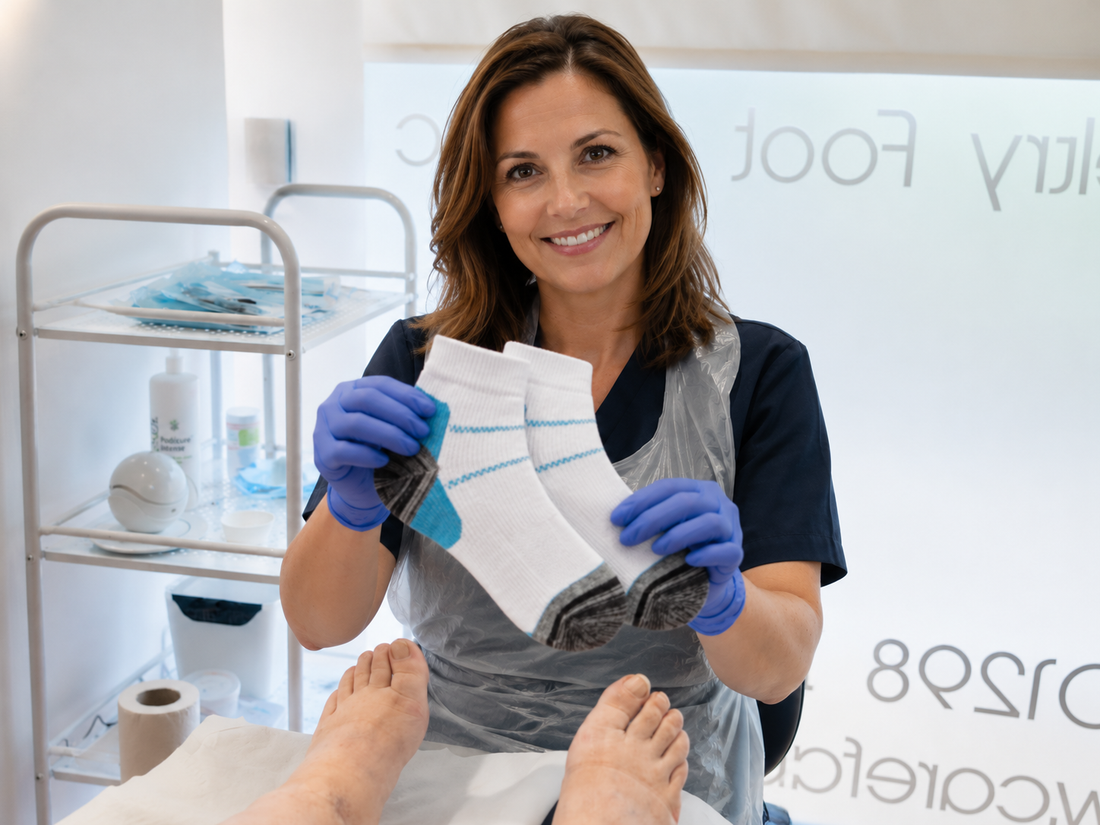
The socks I gave Margaret are the Archly Arch-Lift Compression Socks. Why these specifically, when there are dozens of compression socks on the shelf? Because the combination is exactly what I look for: the built-in arch-support panel, the gentle 15 to 20 mmHg compression at the foot and ankle, a soft, breathable cotton-rich knit that does not dig in, and a reinforced heel and toe so they last. All of it in something that looks and feels like a normal sock, so it actually gets worn every day, which is the only way any of this works.
And I will be honest with you. They have been going through my clinic so quickly that I now keep a waiting list, because they regularly sell out on the website.
The first-step pain in the morning was the worst part of my day. Two weeks in and I genuinely do not dread getting out of bed.
Susan H. Leeds, verified customerI am a nurse, twelve-hour shifts. My ankles used to be puffy by the end. These have made a real difference, and you cannot even see them.
Karen P. Bristol, verified customerSceptical at first, as I have wasted a fortune on insoles. These are the only thing that has actually helped my arches.
Diane M. Glasgow, verified customerHow to try them
If you would like to try the exact socks I recommend in my clinic, you can check current availability on the official Archly website. They are an independent British brand and they back every order with a money-back guarantee, so it is an easy and low-risk thing to try for yourself.
Comments (148)
This is me exactly, the first step in the morning is agony. I always blamed my age. Just ordered a set, fingers crossed.
My sister put me onto these last month. Six weeks in and the afternoon ache really has eased off. Worth a try, and the guarantee made it easy.
Wish I had read this years ago. I assumed it was just standing all day at work. Ordered a set for me and my mum.
Sceptical, but the money-back made it easy to try. Glad I did, my ankles are not nearly so puffy of an evening now.