
A blog by Emma Vos
Foot Health • Special Report
A UK Podiatrist: The Real Reason Your Feet Throb by 3pm Is Not Your Age, Your Weight, or Your Shoes
After 12 years treating aching feet, I stopped handing patients another insole. Here is what I suggest they wear instead, and why so many tell me they feel the difference within days.

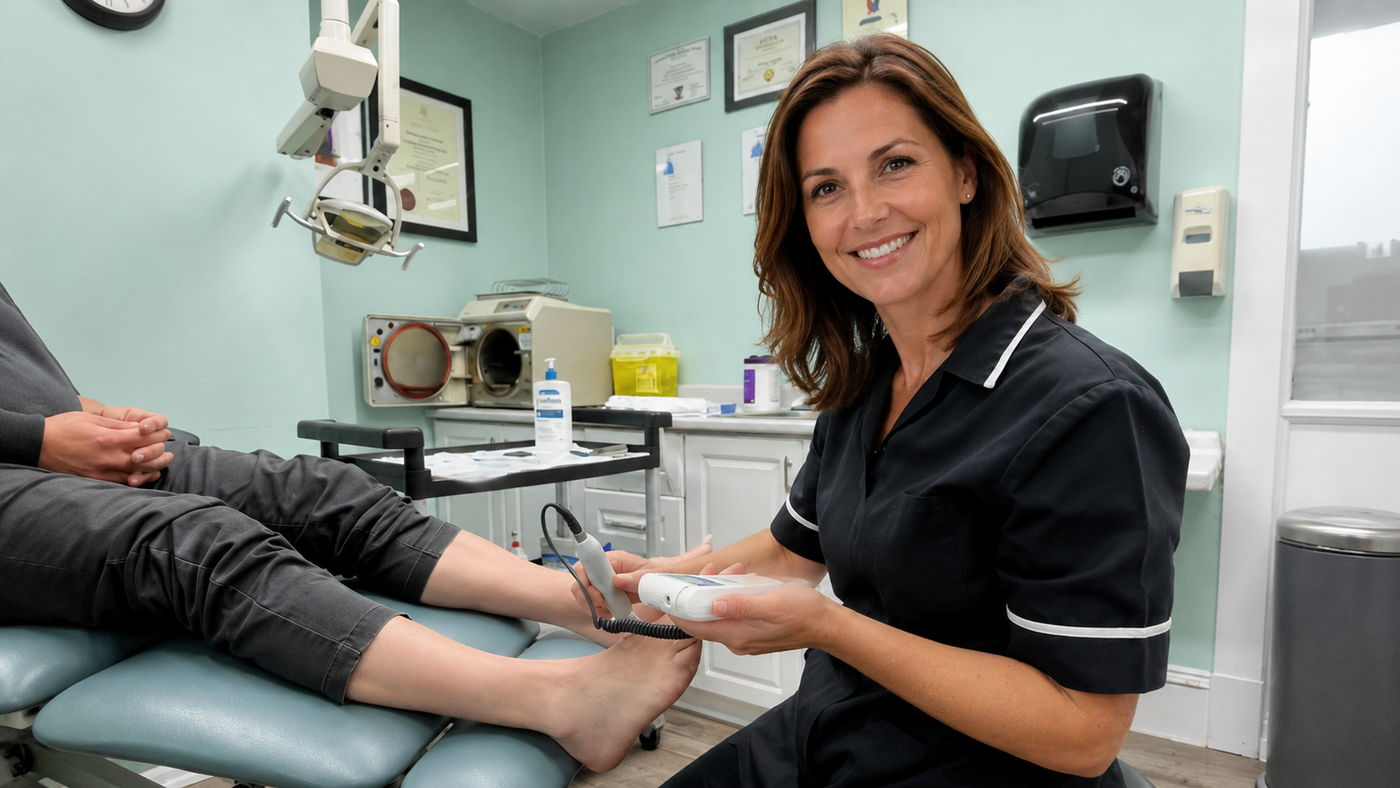
Key takeaways
- Aching feet after a day on your feet are very common in women over 50, and are usually mechanical rather than simply "old age".1
- The soreness you feel is often only the symptom. The real strain tends to sit higher up, in the arch.
- That is why cushioning alone (insoles, padded trainers) so often disappoints.
- Puffy ankles and the dent your sock leaves by evening are usually fluid pooling, gentle compression at the foot and ankle helps move it along.
Every week, someone sits down in my clinic, slips off their shoe, and says some version of the same sentence: "I suppose this is just my age now." They are usually in their fifties or sixties. They are usually on their feet a lot, a nurse, a teacher, a carer, someone who runs a home and a family. And they have usually decided, quietly, that aching feet are simply the rent you pay for getting older.
I want to tell you what I tell them. It is almost never just your age. And it is rarely your shoes, your weight, or how much you walk. In most of the patients I see, the ache traces back to one mechanical cause that nobody has explained to them, and once you understand it, the response is far simpler and cheaper than the insoles and clinic visits many have already paid for.
First, does any of this sound familiar?
See how many you recognise. In my experience, three or more usually points in the same direction.
- A sharp stab in your heel or arch on the first step out of bed in the morning.
- Feet that feel fine at 9am but are throbbing and heavy by mid-afternoon.
- That deep ache up through the arch after a long shift, a day of errands, or standing at the sink.
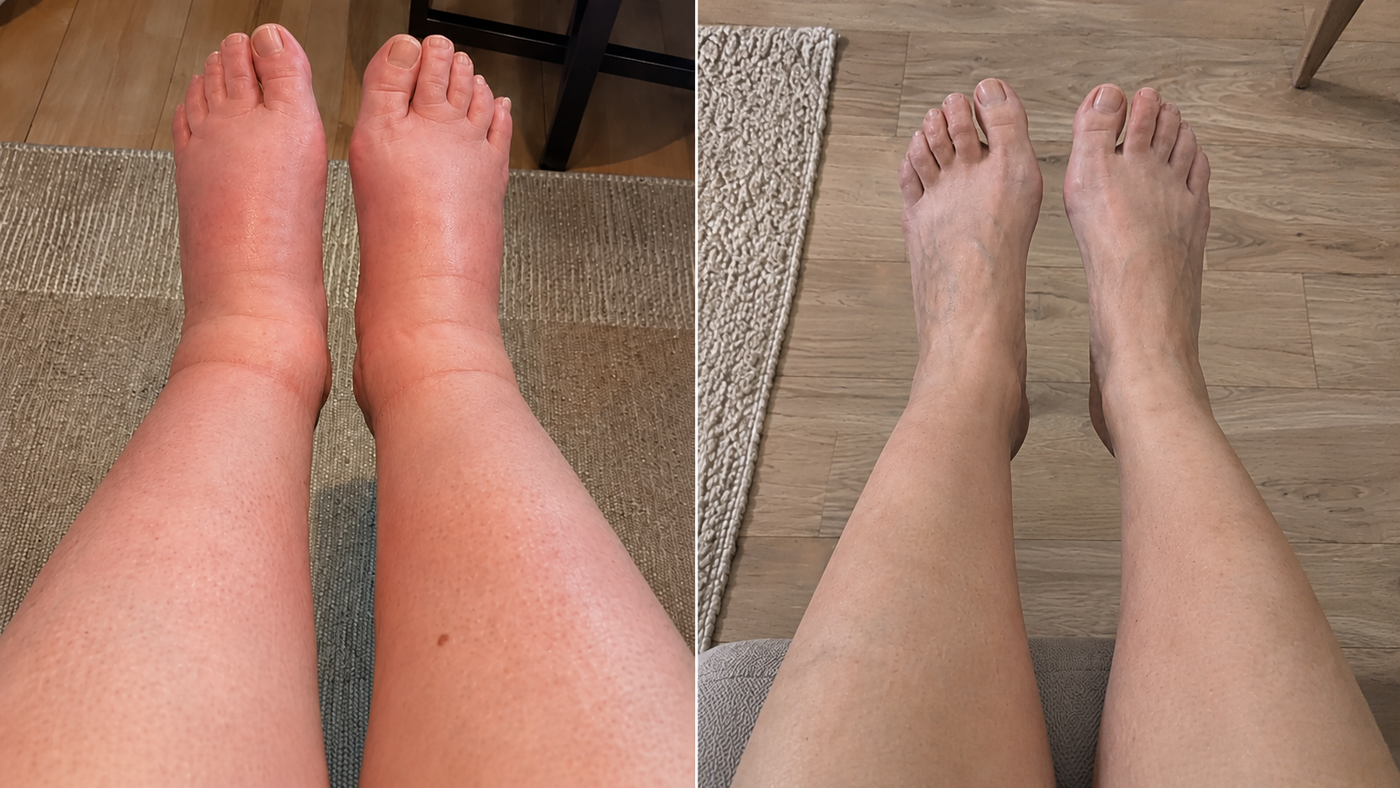
- A dent where your sock sat, or ankles that look a little puffy by the evening.
- You have already tried insoles, supportive trainers, or rolling your foot on a frozen bottle, and the relief never lasts.
The mistake almost everyone makes
When your feet hurt, the instinct is to cushion them. Thicker insoles. Padded trainers. A gel pad under the heel. It makes sense, and it does take the edge off for an hour or two.
But here is the pattern I see every single week: cushioning soothes the soreness, not the cause. An insole sits underneath your foot and softens the blow. It does little to change the thing that is creating the strain in the first place.
Using an insole for this kind of ache is like bailing water out of a boat without plugging the leak. You can keep bailing all day. The water keeps coming back.
So what is the leak?
It is your arch, and what happens to it under load.
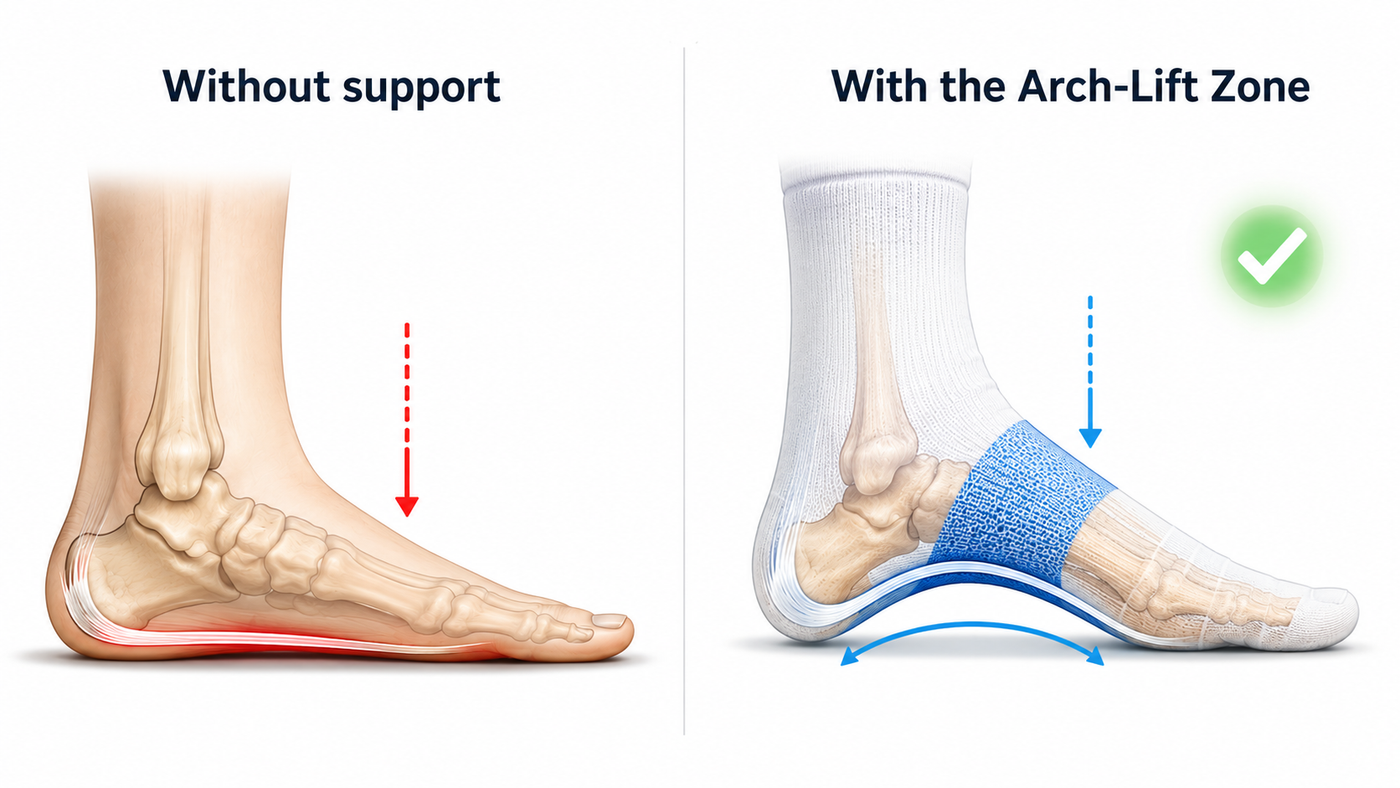
Your arch works like a spring. Every time you stand and take a step, it flattens to absorb your weight, then springs back. That is exactly how it is meant to work. But when you are on your feet for hours, especially as the supporting tissues lose a little of their tension with age and hormonal change, that arch tends to flatten further and recover more slowly.3 It can stay collapsed for longer with every step.
That sustained over-stretch is what tugs on the tissue along the bottom of the foot. For many people it is why the first step in the morning stabs, and why the ache builds through the day rather than first thing. For a lot of my patients, the strain does not really come from the sole of the foot. It traces back to an arch that drops under load and never gets properly supported.
And those sock-line dents and puffy ankles?
There is a second thing my patients describe, and it usually arrives with the ache: a dent where the sock sat, and ankles that look a little puffy by the evening. That is fluid pooling. When you are on your feet all day, fluid gathers around the foot and ankle, and by mid-afternoon it has nowhere to go.
It is the same root cause as the arch, your feet are simply working harder than they should, all day. Gentle compression around the foot and ankle gives your circulation a hand to move that fluid along, so there is less of that heavy, puffy, sock-line feeling by the time you finally sit down. The arch panel takes the strain, the compression helps with the puffiness. Two problems, one sock.
What I started suggesting instead
Once I understood the problem this way, I changed what I recommended. Instead of one more thing to put under the foot, I started looking for something that would gently support the arch itself, hold it up where it collapses, and do it all day without anyone having to think about it.
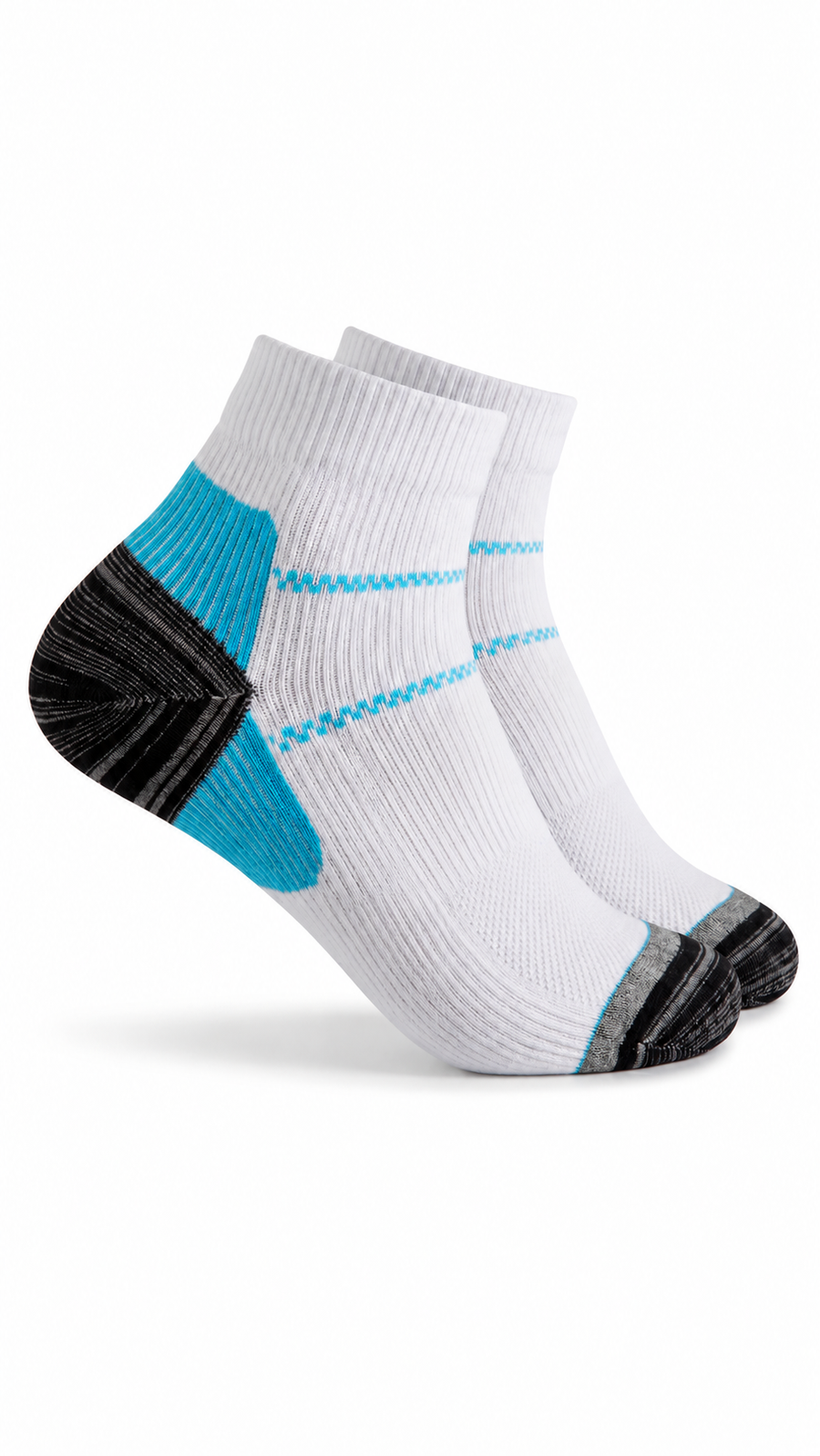
The most practical answer turned out to be the simplest: a sock. Not an ordinary sock, and not a tight medical stocking that leaves red rings around your leg. A sock knitted with a firmer support panel built into the arch, paired with gentle compression that hugs the foot and ankle, to help with the puffiness and ease that tired, aching feeling by the end of the day.
The pair I now point people towards is from a UK brand called Archly. I am not selling you an appointment or a clinic visit. You wear them with the shoes you already own, and many people tell me the difference shows up within days.
An honest note: Archly socks are everyday compression socks, not a medical device, and this is a sponsored article. If you have diabetes, a circulatory condition, or a recent or severe foot injury, please check with your GP or a registered podiatrist before using any compression sock.
What Emma recommends
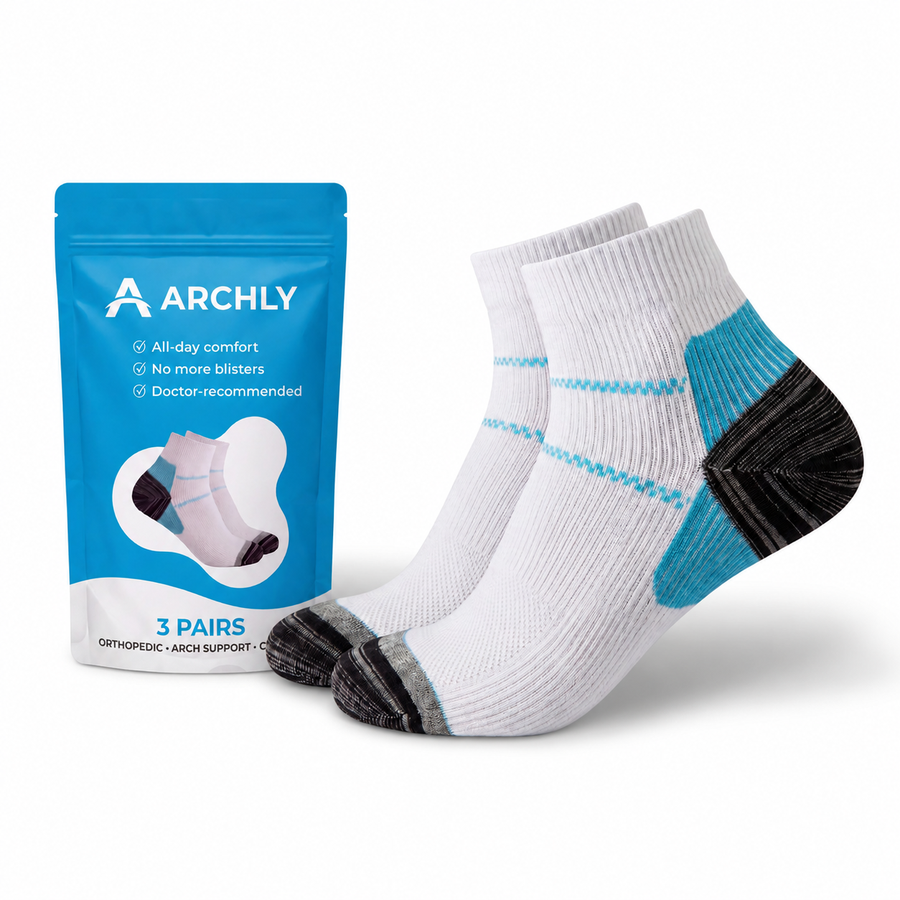
Archly All-Day Compression Socks
- Arch-Lift Zone: a tighter-weave panel that supports the arch where it collapses
- 15-20 mmHg gentle compression that hugs the foot and ankle
- Breathable, quick-dry knit with a seamless toe
- No tight red marks, holds shape 200+ washes
- Sizes UK 3-7 and UK 8-12
Less than a single private podiatry appointment. Free UK delivery.
Get my 6 pairs (£39.90) →What to expect, honestly
I will not promise you a miracle, because feet do not work that way and anyone who tells you otherwise is selling rather than helping. But here is the pattern customers most often describe:
- Day 1: the socks feel supportive, not squeezing. Many say the arch feels "held" the first time they stand up.
- The first week or two: the late-afternoon ache and evening heaviness tend to ease.
- A few weeks in: that first-step-in-the-morning stab is often the part people say they miss the least.
What readers and patients tell me
"I assumed it was another gimmick after years of insoles that did nothing. About three weeks in I stood through my granddaughter's sports day and my feet didn't punish me that night. Genuinely surprised."
"Took a couple of weeks for me, not overnight, but the back half of my day is so much better now. The first step out of bed used to make me wince and that has really eased off."
"Comfortable from the first wear and no tight marks at the top, which was my worry. I'd like more colours, but they are the only socks I reach for on a long shift now."
The keep-the-socks 30-day guarantee
If your feet are not happier within 30 days, email support and you get a full refund. No need to post anything back, no hidden fees. The risk sits with Archly, not with you.
Best-value 6-pair bundle · Free UK delivery · 30-day money-back, no need to return them
Questions I get asked
Will this actually help my arch and heel pain?
If your ache builds through the day or stabs on the first step in the morning, it often traces back to the arch dropping under load, which is what the Arch-Lift Zone is designed to support, by gently holding the arch and easing that tired, aching feeling. It is not a cure, and results vary from person to person.
How is this different from the insoles I already tried?
Insoles cushion underneath the foot. This supports the arch itself from around it, and adds gentle compression to help with swelling. Different job, and for most people a different result.
Is the compression too tight?
No. It is a gentle 15-20 mmHg at the ankle, an everyday comfort level, not a stiff prescription stocking. It supports without leaving tight red marks.
What size do I need?
Two sizes cover most people: UK 3-7 and UK 8-12. If you are between sizes, size up. Exchanges are easy.
What if they do not work for me?
You have 30 days. If you are not happier, email for a full refund and you do not need to send them back.

About the author
Emma is an HCPC-registered podiatrist with over 12 years treating foot and lower-limb pain in UK clinics, and a member of the Royal College of Podiatry. She writes for The Wellbeing Review on practical, everyday foot health. She has reviewed and recommends the product featured in this article.
Emma Vos, HCPC-registered Podiatrist
References
- English Longitudinal Study of Ageing (ELSA). Foot pain and disability among older adults in England.
- Thomas MJ, Roddy E, et al. The population prevalence of foot and ankle pain in middle and older age. Journal of Foot and Ankle Research.
- Menz HB, et al. Plantar heel pain in the general population. Clinical Assessment Study of the Foot (CASF), Keele University.
- Royal College of Podiatry. Public guidance on common foot pain and self-care.
- Musculoskeletal symptoms around the menopause: a review of the evidence.
Reader comments (3)
Comments are moderated. Please be kind and stay on topic.
Wish I'd read this years ago. I've spent a fortune on insoles that did nothing. Ordered a set for me and my sister, she's a carer and on her feet constantly.
Glad it was useful, Pauline. Carers are exactly who I had in mind writing this. Do let her wear them on her longest shifts first.
Bought a pair for my wife who's a nurse. She was sceptical but says her feet are far less sore after a long shift. The no-return refund made it easy to try.